
Carpet deodorizing vs cleaning: GTA guide for homeowners
Carpet deodorizing vs cleaning: GTA guide for homeowners
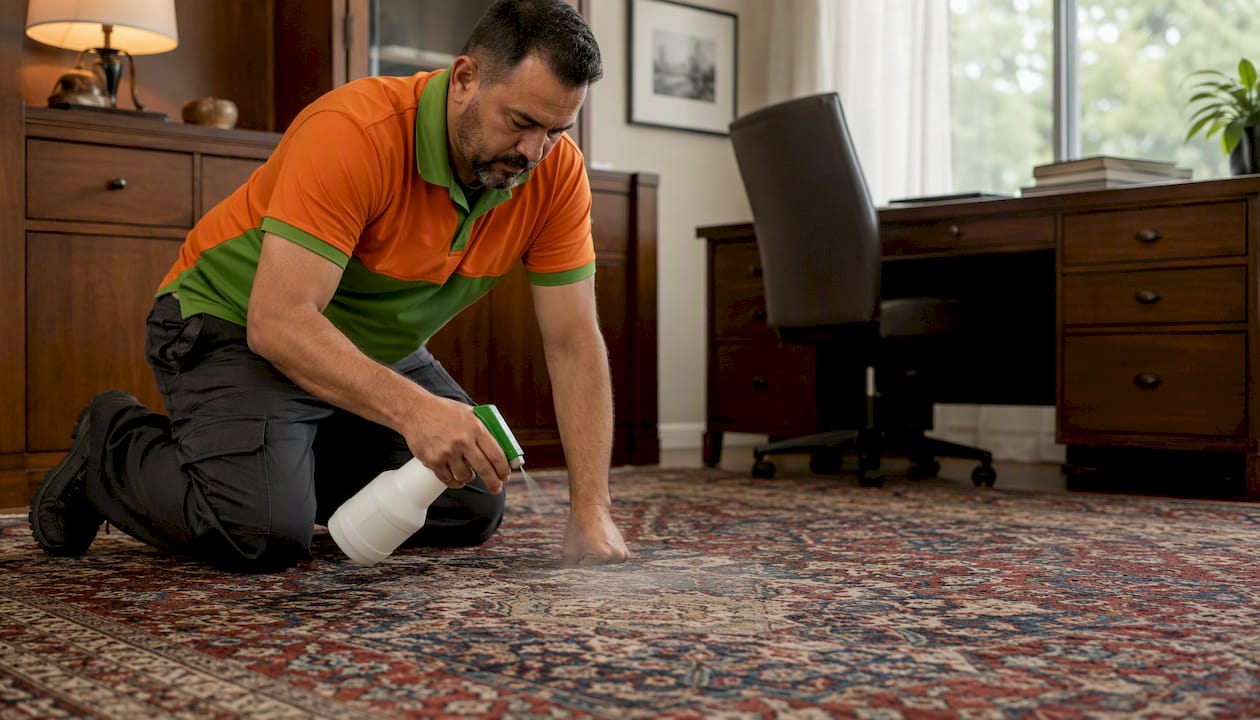
For persistent carpet odours in the Greater Toronto Area, professional deep cleaning — hot-water extraction and source removal — is the solution that lasts. Deodorizing only masks the problem. The Carpet and Rug Institute is clear: deep cleaning should happen before soil and contamination become visible, not after. If your carpet smells after airing out and vacuuming, book a professional extraction. If you just need freshness for a showing or a quick touch-up, a professional deodorizing treatment can bridge the gap — but only as a short-term step, never a substitute.
Ateliermaids provides extraction cleaning, drying verification, and a 100% satisfaction guarantee for GTA properties, with insured crews and a service report after every visit.
Table of Contents
- What to do next: your quick action checklist
- Why deep cleaning wins: the evidence and the long-term case
- Ateliermaids carpet cleaning across the GTA: what to expect
- Key takeaways
- A word on what the industry gets wrong
- Useful sources and further reading
What to do next: your quick action checklist
- Assess the source first. Did the smell follow a pet accident, a damp period, or a flood? Odour tied to moisture or urine almost always means contamination has reached the pad or subfloor. Surface treatment will not fix it.
- Try airing and vacuuming. If the smell returns within a day or two, you have a source problem, not a surface problem. Call for a professional evaluation.
- Ask the right questions before booking. Any reputable provider should answer: Do you use hot-water extraction? How do you verify dryness? Do you carry moisture meters? What is your satisfaction guarantee? For a full vetting checklist, see questions to ask before hiring a cleaner.
- Know when deodorizing is appropriate. Pre-sale showings, light seasonal freshening, or a quick touch-up between scheduled deep cleans are all reasonable uses. Urine-saturated padding, musty HVAC-linked odours, or any smell that returns after cleaning are not.
- Know when to call a remediation specialist. Visible mould, sewage backup, or carpet and padding that cannot be dried within 24–48 hours require restoration or replacement, not routine cleaning.
For GTA scheduling, most professional carpet cleaning appointments can be booked within a few days. On-site time for a standard room runs roughly 1–3 hours; drying takes 4–12 hours depending on method and humidity. Remediation work takes longer and should be scoped on-site.
Pro Tip: Poor indoor airflow slows drying and can reactivate odours. If your home has dryer vent or HVAC issues, address those alongside carpet cleaning — dryer vent cleaning is one often-overlooked step that affects indoor humidity and drying times.
Why deep cleaning wins: the evidence and the long-term case
Carpet odour is a symptom of contamination, not a cosmetic issue. Deodorizing changes what you smell; source removal deals with what is creating the odour. That distinction matters practically: a deodorizer applied over pet urine that has soaked into the pad will smell fine for a week, then return — often worse — as the pad dries and wicking pulls dissolved contaminants back up through the face fibres.
Hot-water extraction works differently. A professional applies an alkaline pre-spray to break down soil and bio-contaminants, agitates the fibres, then extracts the solution under controlled pressure. An acidic neutralizing rinse follows — skipping this step leaves sticky residue that accelerates resoiling. Then comes the phase most people underestimate: drying. Over-wetting or drying too quickly can reactivate odours or cause browning; professionals use moisture meters to verify the carpet and pad are genuinely dry before leaving.
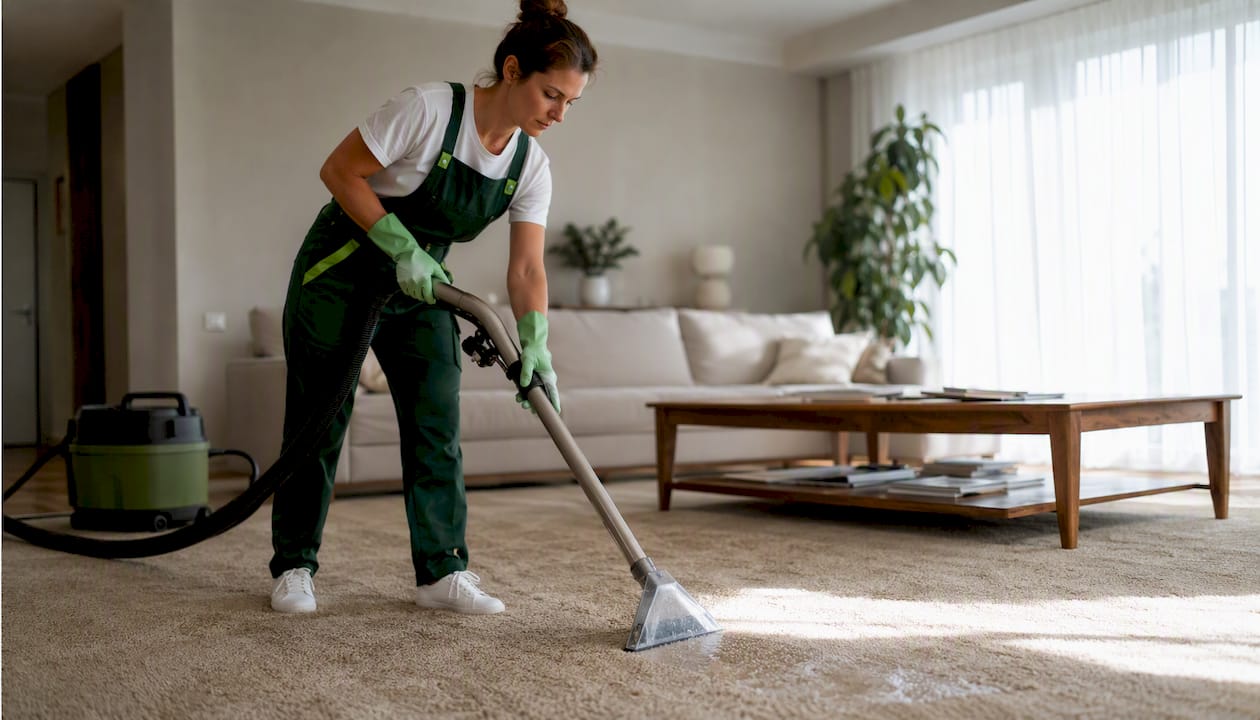
For pet urine specifically, UV diagnostics locate saturation that is invisible to the eye. When pad saturation exists, surface deodorizing is futile — pad replacement and possibly subfloor treatment are the only lasting fix.
The financial case for scheduled extraction is straightforward. Professional cleaning programmes can significantly extend commercial carpet life compared with vacuuming and spot cleaning alone. For property managers and small business owners, that math is simple: a recurring extraction programme costs far less than early replacement. The CRI recommends scheduling deep cleaning before soil becomes visible, with frequency tied to traffic load — every 3–12 months depending on use.
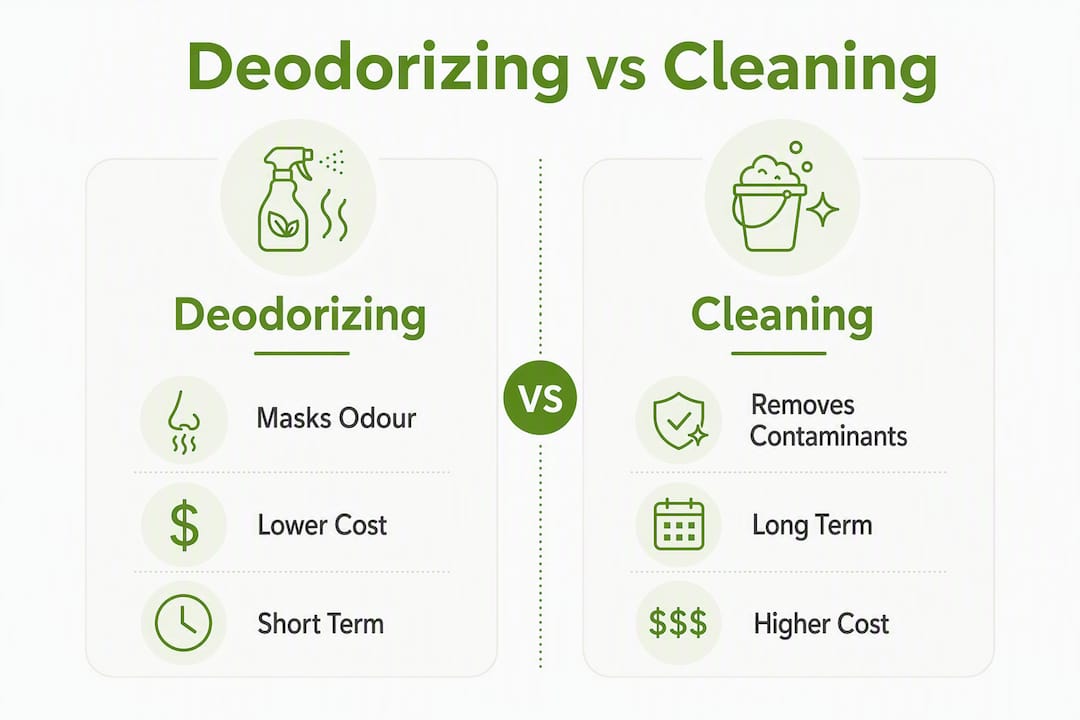
Low-moisture methods like encapsulation return a carpet to presentable condition quickly, but they do not replace restorative hot-water extraction when deep soil or bio-contaminants are present. Use them for interim maintenance between full extraction cycles, not as a substitute.
Ateliermaids implements this full process: dedicated crews familiar with each property, moisture-meter drying verification, a documented service report after every visit, and a satisfaction guarantee. For house cleaning clients and office and commercial accounts alike, the crew stays consistent — so nothing gets missed.
Ateliermaids carpet cleaning across the GTA: what to expect
Ateliermaids is the practical alternative to a one-size-fits-all cleaning company for GTA homeowners, renters, and property managers who need carpet odour dealt with properly, not temporarily. The difference is the process: every carpet job includes a moisture and UV assessment before any product is applied, hot-water extraction with a neutralizing rinse, sub-surface extraction when pet urine or flooding is involved, and a drying verification log in the service report.
Professional deodorizing as an adjunct service runs at a lower cost and suits short-term freshening. Full extraction cleaning costs more and takes longer on-site, but it removes the contamination that causes recurring odour and protects the carpet’s remaining life. Ateliermaids uses flat pricing, so you know the cost before the crew arrives — no surprise charges for extra rooms or a second rinse pass.
Scheduling across the GTA is typically available within a few business days. On-site duration for extraction cleaning runs 1–3 hours per area; drying is 4–12 hours. Pad replacement or subfloor work, when required, is scoped and quoted separately on-site.
Book an on-site evaluation or request a service report through Ateliermaids’ cleaning services. Crews are insured, background-checked, and backed by a 100% satisfaction guarantee.
Key takeaways
Professional deep cleaning removes the contamination that causes carpet odour; deodorizing only masks surface smell and is not a lasting solution for persistent or moisture-related odours.
| Point | Details |
|---|---|
| Deep cleaning vs. deodorizing | Extraction removes odour sources; deodorizing masks surface smell and odour returns when contamination remains. |
| Drying verification matters | Over-wetting or fast drying reactivates odours; moisture meters confirm the pad is genuinely dry. |
| Pet urine needs UV assessment | Urine that has reached the pad requires sub-surface extraction or pad replacement — surface treatment alone fails. |
| Scheduled extraction extends carpet life | Professional programmes can significantly extend carpet life compared with vacuuming and spot cleaning alone. |
| Ateliermaids for GTA properties | Ateliermaids delivers extraction cleaning, drying verification, service reports, and a satisfaction guarantee across the GTA. |
A word on what the industry gets wrong
Most carpet care conversations treat odour as a cosmetic problem and deodorizing as a reasonable first response. That framing is backwards. By the time a carpet smells persistently, the contamination has usually moved past the face fibres into the backing and pad. Spraying something on top does not stop fibre degradation or protect indoor air quality — it just delays the conversation about what the carpet actually needs.
The other thing practitioners understate is drying. Extraction gets the attention; drying is treated as the boring part. But a carpet that is not verified dry within the right window will wick, and a carpet that wicks will smell again within days. A service report that documents moisture readings at the end of a visit is not a bureaucratic nicety — it is the only proof that the job was actually finished.
For GTA property owners, the practical takeaway is this: treat carpet maintenance as an asset-management decision, not a cleaning chore. Schedule extraction before the smell arrives, not after. The cost of a recurring programme is a fraction of early replacement.
Useful sources and further reading
The claims in this article draw on professional standards and technical guides. These are the primary sources worth bookmarking:
- CRI 204 Commercial Carpet Maintenance Standard — the industry benchmark for cleaning schedules, soil prevention, and deep cleaning frequency.
- How to deep clean a carpet — technical walkthrough of extraction, drying control, and moisture verification.
- Carpet deodorizing treatments guide — covers wicking, alkaline residue, and why rinse documentation matters.
- Pet urine removal carpet cleaning guide — UV diagnostics, pad saturation assessment, and when replacement is the only option.
- Ateliermaids window and carpet care services — service options and scheduling for GTA homeowners and property managers.
Comparative summary
| Dimension | Professional deodorizing | Professional deep cleaning (extraction) |
|---|---|---|
| Goal / outcome | Temporary odour masking | Contamination removal and odour elimination |
| Persistence | Days to weeks | Months; longer with maintenance schedule |
| Risk | Residue buildup; odour returns; resoiling | Wicking if drying is not verified; mitigated by moisture meters |
| Typical process | Deodorizer application; no extraction | Pre-spray, agitation, hot-water extraction, neutralizing rinse, drying verification |
| Best use case | Pre-showing freshening; light maintenance | Persistent odour, pet accidents, post-flood, scheduled maintenance |