
Cleaning air vents: a practical guide for GTA homeowners
Cleaning air vents: a practical guide for GTA homeowners
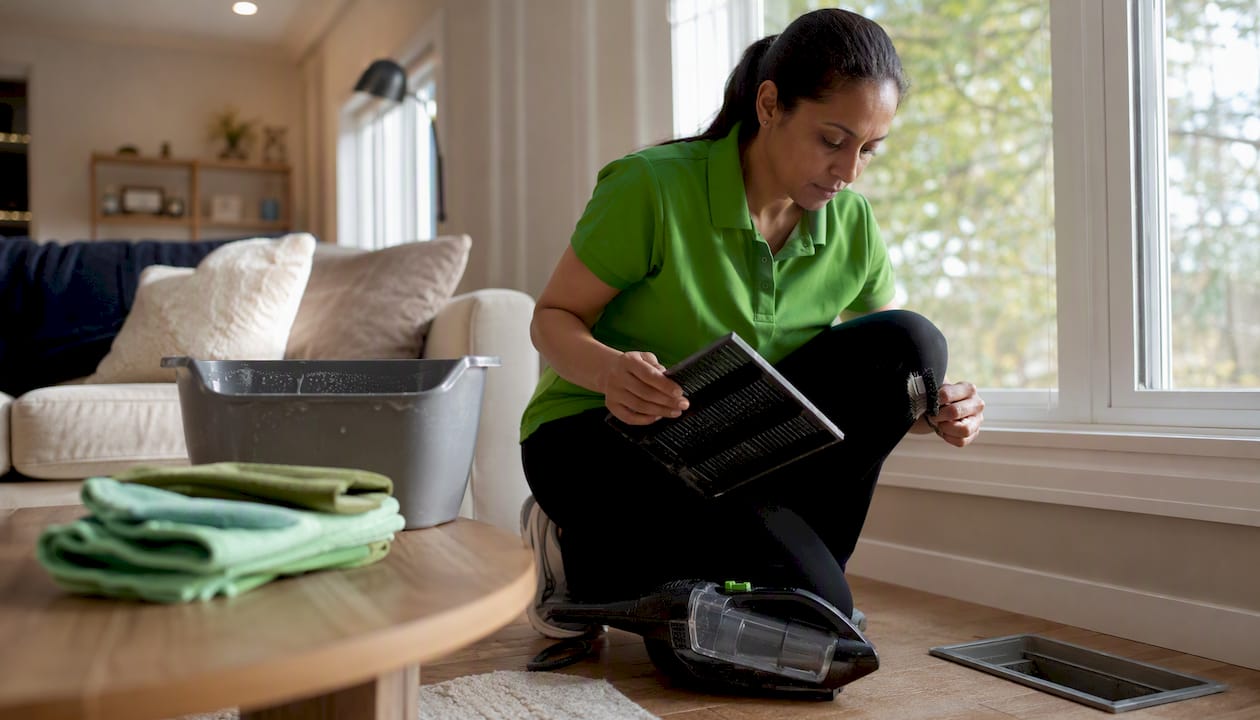
A professional surface clean of your vent covers and registers removes built-up dust from the grilles, the cover backs, and the visible section of duct behind each register, restores airflow, and leaves you with a written service report. The City of Toronto recommends regular HVAC maintenance, including timely filter replacement, as part of managing indoor air quality. The National Air Duct Cleaners Association (NADCA) sets the professional standards your cleaner should be working to. Ateliermaids serves homeowners, tenants, and property managers across the Greater Toronto Area and can include register cleaning in any house, office, or move-in/move-out booking. Request a written quote when you schedule your next clean.
Table of Contents
- What does “cleaning air vents” actually include?
- When should you book a professional vent surface clean?
- What does a professional crew actually do during the visit?
- How to prepare your space before the crew arrives
- How much does professional vent surface cleaning cost?
- What questions should you ask before hiring a cleaner?
- Simple aftercare to keep registers clean for longer
- Key takeaways
- A note on how Ateliermaids approaches register cleaning
- Ready to book a professional vent clean with Ateliermaids?
- Useful sources and further reading
What does “cleaning air vents” actually include?
The phrase gets used loosely online, so here is exactly what this service covers: the surface cleaning of vent covers, registers, and grilles, plus the accessible duct boot directly behind each cover. It does not mean a full internal duct cleaning, furnace servicing, or blower deep-cleaning. Those are separate trades.
What is included in a professional surface vent clean:
- Turning off the HVAC fan before any cover is touched
- Removing each cover or register and labelling it for correct reinstallation
- Vacuuming the accessible duct boot with a crevice tool (typically 12–18 inches in)
- Soaking covers in warm, soapy water, scrubbing with a soft brush, rinsing, and drying completely
- Reinstalling covers and running a short functional check
- A written service report with any photos taken during the visit and a recommended follow-up timeline
What is not included:
- Cleaning inside the ductwork beyond the visible boot
- Furnace, blower, or coil servicing
- Mould remediation or pest removal (the U.S. EPA advises calling a specialist if you see visible mould, rodent droppings, or standing water in a duct opening)
When should you book a professional vent surface clean?
Wiping vent covers every few months handles routine surface dust. A professional visit makes sense at specific triggers, not on a rigid annual schedule.
Book a professional surface clean when you notice any of these:
- Moving in or out of a property (registers are often overlooked in standard handovers)
- Visible heavy dust on the back of covers or dust blowing out when the fan runs
- Odd or musty odours coming from vents
- Covers re-soiling within days of a DIY wipe-down
- Post-renovation cleanup, when construction dust has settled into every opening
- Spring or fall HVAC switchover in a GTA property, when systems shift modes and circulate accumulated dust
For rental properties and small offices, building register cleaning into a move-in/move-out package or a seasonal deep clean is the most cost-effective approach.
What does a professional crew actually do during the visit?
Standard professional surface cleaning follows a fixed order for good reason: skipping steps, especially drying, creates new problems.
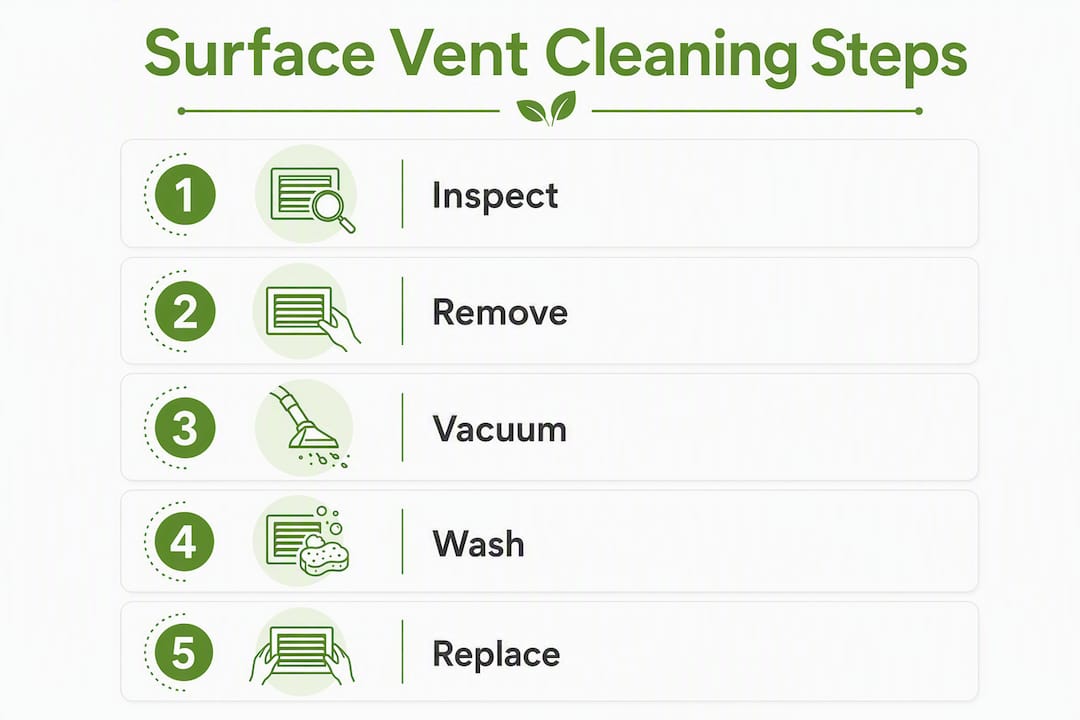
- Shut off the HVAC fan. No air movement means no dust redistribution while covers are off.
- Remove and label each cover. Labelling matters in homes with mixed register sizes or directional grilles.
- Vacuum the duct boot. A crevice tool reaches 12–18 inches into the boot, where most of the re-entrained dust sits.
- Soak and scrub covers. Warm, soapy water loosens grease and dust. A soft-bristle brush works the slats without bending them.
- Rinse and dry completely. Metal covers must be fully dry before reinstallation. Moisture left on steel registers leads to rust; in a damp boot, it can encourage mould.
- Reinstall covers. Correct orientation and a snug fit prevent rattling and air bypass.
- Run a post-service functional check. The crew turns the fan on, watches for airflow at each vent, and does a quick visual or white-cloth spot test.
Tools professionals bring: crevice vacuum attachments, soft brushes, microfiber towels, warm soapy water, and a camera for the service report photos.
Pro Tip: In older GTA homes, registers are sometimes painted into place. A technician should score the paint seal gently with a utility knife around the perimeter before pulling the cover, rather than forcing it off and tearing the surrounding drywall or trim.
How to prepare your space before the crew arrives
A little prep on your end cuts visit time and prevents delays.
Checklist for homeowners and property managers:
- Clear furniture or objects within arm’s reach of each vent
- Flag any non-standard or painted-in covers with a sticky note
- Secure pets in a separate room
- Confirm parking or building access in advance and share it with the cleaner
- Know where your furnace or air handler is located in case the crew needs to confirm it is off
Estimated timing:
| Setting | Vents | Approximate visit time |
|---|---|---|
| Apartment or condo | 4–6 | — |
| Detached home | 12 | — |
| Small office | 6 | — |

A useful planning rule: allow roughly 30 minutes per vent for a thorough surface clean that includes removal, washing, drying, and vacuuming the boot. Actual time varies with cover condition and access.
If you open a cover during prep and see mould, droppings, or standing water, stop. Do not proceed with a surface clean. Contact a specialist, as the U.S. EPA recommends professional inspection for those conditions.
How much does professional vent surface cleaning cost?
Pricing varies by how the cleaner structures their work. Most charge either per vent or as a flat fee bundled with other cleaning services.
| Pricing model | Typical structure | Best for |
|---|---|---|
| Per-vent rate | Charged per cover cleaned | Spot cleans, small jobs |
| Flat job fee | Fixed price for the full visit | Standard homes and offices |
| Bundled add-on | Added to a house or office clean | Routine or move-in/move-out bookings |
Factors that push the price up:
- High number of vents or hard-to-reach locations (ceiling registers, high walls)
- Covers that are heavily soiled, corroded, or painted in place
- Non-standard cover materials (decorative cast iron, custom grilles)
- Travel or parking surcharges for dense urban locations
For a written quote, send the cleaner: the number and type of vents, the property address, whether any covers are painted in or damaged, and whether you want the clean bundled with other services. A flat-pricing provider will give you a firm number before the visit, not an estimate that grows on the day.
What questions should you ask before hiring a cleaner?
Vetting a cleaner for vent work takes five minutes and saves a lot of frustration.
- Are your teams insured and background-checked?
- Do you provide a written quote before the visit and a service report after?
- What tools do you use for the duct boot? (A crevice vacuum tool is the right answer; a shop vac alone is not.)
- Do you offer a satisfaction guarantee?
- Can you show before-and-after photos from a similar job?
Red flags that should make you walk away:
- Verbal-only quotes with no written confirmation
- No proof of insurance when asked directly
- Pressure to upsell a full duct cleaning you did not ask about
- Refusal to document the work or provide a service report
- No clear answer on what tools they use inside the boot
Ask for NADCA-aligned credentials or equivalent professional standards when comparing providers. Flat pricing and a written service report are the two non-negotiables.
Simple aftercare to keep registers clean for longer
The City of Toronto recommends timely filter replacement as a core part of managing indoor air contaminants. A clean filter is the single biggest factor in how quickly your registers re-soil.
Routine maintenance habits:
- Replace or inspect your HVAC filter regularly, increasing frequency if you have pets or allergy sufferers in the home
- Lightly vacuum or wipe register faces every few months between professional visits
- After a professional clean, run the fan for 30 minutes and do a white-cloth spot test at two or three vents to confirm clean airflow
- Note any lingering odours after the fan runs; a musty smell that persists after a surface clean points to an issue inside the ductwork
Book the next professional surface clean at the next seasonal transition, at your next move-in/move-out, or sooner if covers re-soil within a few weeks. Visible mould or a persistent musty smell after filter replacement means it is time to escalate to a specialist.
Key takeaways
Professional surface vent cleaning removes dust from covers, registers, and the accessible duct boot, restores airflow, and produces a written service report — and it is most effective when paired with regular filter changes and booked at clear triggers like move-in/move-out or post-renovation.
| Point | Details |
|---|---|
| Scope is surface only | The service cleans covers, grilles, and the visible duct boot — not internal ductwork. |
| Timing and triggers | Book at move-in/move-out, post-renovation, or when covers re-soil quickly after DIY cleaning. |
| Visit duration | Allow roughly 30 minutes per vent; a standard home typically takes 2–3 hours. |
| Key vetting question | Ask for a written quote, a service report, and proof of insurance before confirming. |
| Ateliermaids in the GTA | Ateliermaids provides insured, vetted crews, flat pricing, and a written service report after every visit, with a 100% satisfaction guarantee. |
A note on how Ateliermaids approaches register cleaning
At Ateliermaids, register and vent cover cleaning is part of how we think about a thorough clean, not an afterthought. Our crews are insured, background-checked, and assigned consistently to each client’s space, so they learn where the awkward ceiling registers are and which covers need extra care. Every visit ends with a written service report. Flat pricing means you know the number before we arrive. And the 100% satisfaction guarantee means if something is not right, we fix it. We have left space here for client case studies and testimonials the Ateliermaids team may add as the service grows. For deeper cleaning tips and local guidance, the Ateliermaids blog is a good starting point.
Ready to book a professional vent clean with Ateliermaids?
Ateliermaids gives GTA homeowners, tenants, and property managers something most cleaners do not: a dedicated crew that knows your space, flat pricing with no surprises, and a written service report after every visit. Register and vent cover cleaning can be added to any house cleaning visit, included in a move-in/move-out package, or built into a recurring office cleaning programme. The crew handles the hard-to-reach registers, the painted-in covers, and the duct boot vacuuming — and leaves you with documentation you can use for property records.

To get a written quote, share your property address, the number of vents, and whether you want register cleaning bundled with other services. View the full range of Ateliermaids cleaning services or reach out directly to confirm availability in your area. Insured teams, flat pricing, satisfaction guaranteed.
Useful sources and further reading
- Indoor air quality — City of Toronto: Local authority guidance on HVAC maintenance and filter replacement for GTA properties.
- How to Clean Air Vent Covers and Finally Get Rid of That Hidden Dust — The Spruce: Practical step-by-step guide covering frequency, soaking, and drying.
If you open a vent cover and find mould, pest activity, or standing water, do not attempt a surface clean. Contact a licensed HVAC specialist or indoor air quality professional for an inspection before proceeding.