
How to choose a cleaning service: a homeowner's checklist
How to choose a cleaning service: a homeowner’s checklist
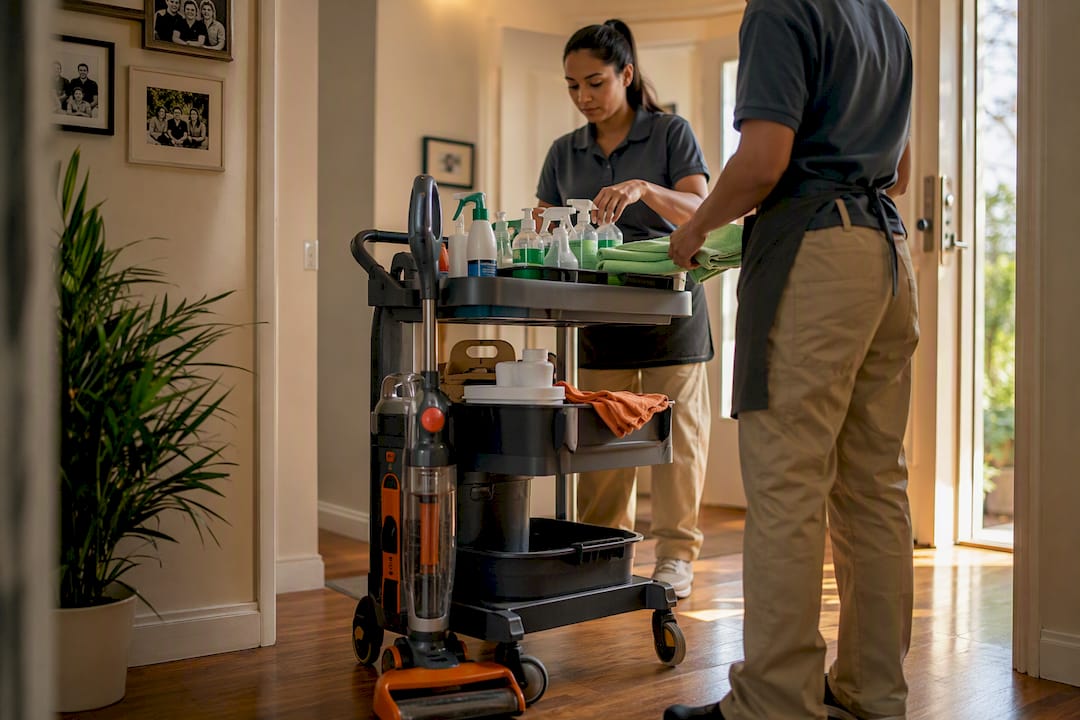
Choose a cleaning service that proves its insurance, assigns you the same crew every visit, and puts the scope of work in writing before anyone touches your home. Those three things predict long-term reliability better than star ratings or a low quote ever will. Reviews tell you how a company performed for someone else; proof of insurance, staffing consistency, and a written scope tell you how it will actually run in your house, week after week.
Here’s why this matters more for recurring cleaning than for a one-time job: you’re not hiring a single visit, you’re hiring a system. A system either has documentation and accountability built in, or it doesn’t, and that gap shows up fast once the novelty wears off.
Use these as your first filter before you even pick up the phone:
- Proof of insurance and workers’ compensation — a company should be able to provide a certificate of insurance (COI) promptly.
- Staffing model and background checks — ask whether cleaners are employees or contractors, and how often checks are refreshed.
- Consistent team assignment — the same one or two people should show up each visit, not a rotating roster.
- Written scope and service reports — a documented list of tasks, plus notes after each visit.
- Transparent pricing and a satisfaction guarantee — a flat quote or clear hourly rate, with a defined re-clean policy if something’s missed.
Key Takeaways
Reliable cleaning service selection depends on verified insurance, consistent crew assignment, written scope of work, and transparent pricing backed by a real satisfaction guarantee.
| Point | Details |
|---|---|
| Ask for the COI first | A legitimate company produces proof of insurance without delay or vague answers. |
| Confirm staffing model | Employee-based teams typically offer more consistent training and backup coverage than contractor-only setups. |
| Request a trial period | A short paid trial lets you judge quality and communication before signing anything long-term. |
| Get the scope in writing | Written service reports and a defined “deep clean” versus standard clean prevent scope disputes later. |
| Consider a documented option | Atelier Maids pairs dedicated crews with flat pricing and post-visit reports, matching the core proofs in this checklist. |
Table of Contents
- How to choose a cleaning service, step by step
- What happens when the checklist gets ignored
- Why systems beat price on the quote sheet
- A low-risk way to put this checklist to work
- Sources
How to choose a cleaning service, step by step
Picking a provider is less about finding “the best” company and more about running a short, structured process that filters out the risky ones. Here’s how to do it without wasting a weekend on phone calls.
1. Figure out what you actually need
Before you contact anyone, define the job. A one-time deep clean before hosting family is a different animal from a biweekly maintenance clean, and a move-out clean has its own checklist entirely (landlords often want inside cabinets, oven interiors, and baseboards addressed specifically). Frequency changes pricing structure too: weekly and biweekly clients often get a lower per-visit rate than one-off bookings, because recurring work is easier for a company to schedule and staff.

Write down square footage, number of bathrooms, pets, and any areas that need special attention (blinds, baseboards, inside the fridge). This becomes your scope document later.
2. Research local companies properly
Don’t stop at star ratings. Read the three-star reviews, not just the five-star ones. They usually contain the most honest detail about what went wrong and how the company responded. Ask neighbours or coworkers for direct referrals, since word-of-mouth tends to surface reliability issues faster than any review platform. Industry guidance from the Better Business Bureau recommends interviewing more than one company so you can compare estimates and confirm each one carries general liability and workers’ compensation coverage.
A partner resource on why homeowners trust professional cleaners makes a similar point: trust builds through small, verifiable signals, not marketing copy.
3. Compare pricing models honestly
Pricing generally falls into three shapes. Hourly rates work well for smaller, irregular jobs but can balloon if a home takes longer than estimated. Flat-rate packages, priced by home size or room count, give you a predictable number and protect you from surprise overages. Per-project quotes suit one-off jobs like a post-construction cleanup or move-out clean, where the scope is unusual enough that hourly billing doesn’t make sense.
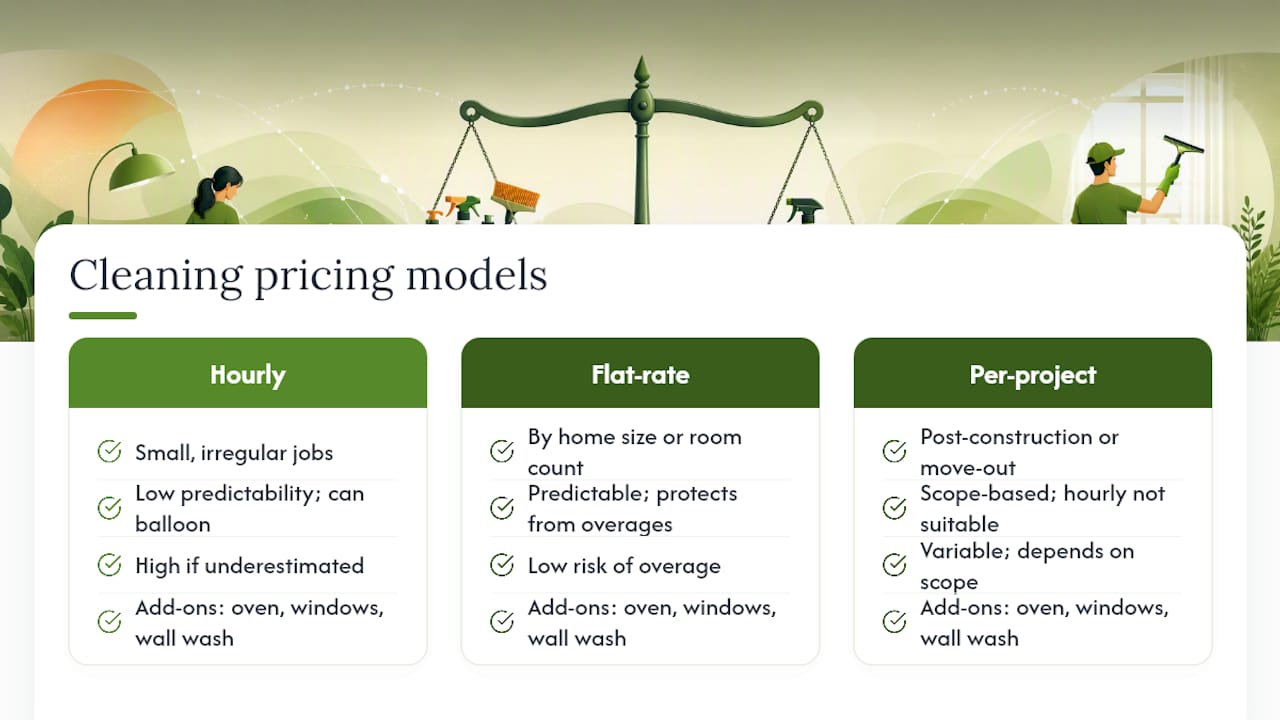
Ask what’s included in the base price and what triggers an add-on charge. Inside-oven cleaning, interior windows, and wall washing are common upsells that catch first-time clients off guard.
4. Run a real interview, not a courtesy call
Ask these questions directly, and pay attention to how confidently they’re answered:
- Can you send me your certificate of insurance before the first visit?
- Are cleaners employees or independent contractors?
- Who runs your background checks, and how often are they refreshed?
- What happens if I’m not satisfied with a visit?
- What supplies and equipment do you provide, and can I request specific products?
- What’s your cancellation and rescheduling policy?
Companies that employ their cleaners directly, rather than relying entirely on independent contractors, generally offer more consistent training, supervision, and backup coverage when someone calls in sick. A vague answer to any of these questions is data, not just awkwardness.
Pro Tip: Ask for the name of the specific person who will be cleaning your home on the first visit. If the company can’t tell you, that’s a sign staffing is loose and rotation is likely.
5. Watch for these red flags
- Hesitation or delay in producing a COI when asked directly.
- No written scope of work, just a verbal promise of “we’ll take care of everything.”
- Entirely contractor-based staffing with no mention of supervision or quality control.
- Pressure to sign a long-term contract before a single visit has happened.
- “Background-checked” used as a slogan with no detail on who runs the check or how often.
Reputable companies tend to welcome detailed questions about insurance, staffing, and guarantees. Evasiveness on any of these points is a practical warning sign worth taking seriously.
6. Request a trial before committing long-term
Experts recommend a paid trial period of a few weeks before signing a longer agreement, giving you room to judge quality, communication, and how well the crew adapts to your home’s quirks, according to guidance from Angi. After the first visit, check corners and baseboards, confirm nothing was skipped, and ask whether the company provides a written service report or visit notes. If they do, that documentation becomes your paper trail for every future visit.

7. Read the contract like it matters, because it does
Before signing anything recurring, confirm these specifically:
- Cancellation terms and required notice period.
- Whether prices can escalate, and under what conditions.
- A clear definition of “deep clean” versus standard clean, so you’re not surprised by scope creep or missing tasks.
- A satisfaction or re-clean guarantee, ideally in writing.
- Confirmation that proof of insurance will be on file before the first appointment.
First-time hiring guides consistently emphasize verifying insurance and background checks and getting a written scope of work before booking anything recurring, per Resident. It’s a small ask that saves a lot of frustration three months in.
On timeline: a first visit typically runs longer than subsequent ones, since the crew is learning your home’s layout and quirks. Quality and rhythm often stabilize somewhere between month three and month nine, particularly when the same team keeps returning and building familiarity with your space, a pattern the BBB also flags as a marker of long-term reliability.
What happens when the checklist gets ignored
Picture a household that hired based on the lowest quote alone. Different cleaners showed up almost every visit, none of them familiar with which bathroom had the finicky faucet or which shelf held the good glassware. Add-on charges appeared on invoices with no warning, and there was no service report to check against when something got missed. Within two months, the homeowner switched providers out of sheer frustration.
Compare that to a setup built around the operational proofs this article recommends: a dedicated crew, flat pricing agreed upfront, and a dated visit note left after every clean. The crew learns the home. The invoice never changes. And when a spot gets missed, there’s a written record to point to instead of a memory dispute.
To verify these things in practice, ask for a sample COI before booking, request an example of a past service report so you know what documentation looks like, and confirm in writing that the same crew will be assigned to your home going forward.
Dedicated documentation, dated visit notes left after every appointment, gives homeowners proof the work was completed and cuts down on the need to supervise every visit personally.
Homeowners who work with a company built around these systems typically report fewer follow-up complaints, more predictable invoices, and cleaning standards that don’t slide after the first month.
Why systems beat price on the quote sheet
We’d rather see a homeowner pay a bit more for a company with real documentation than save $20 on a provider who can’t produce a COI. Higher price often reflects the safeguards that keep a company stable: payroll taxes, insurance premiums, training time, and someone answering the phone when a visit needs rescheduling.
Pro Tip: Ask for a dated sample service report and a current COI before you book anything. If either takes more than a day to produce, that’s your answer.
Rule of thumb: if a company can’t document its last job, don’t expect it to document yours.
A low-risk way to put this checklist to work
Every guide like this eventually runs into the same problem: knowing what to look for doesn’t help much if you still have to vet five companies yourself. Atelier Maids is built around the exact proofs this checklist asks for, so there’s less guesswork on your end.
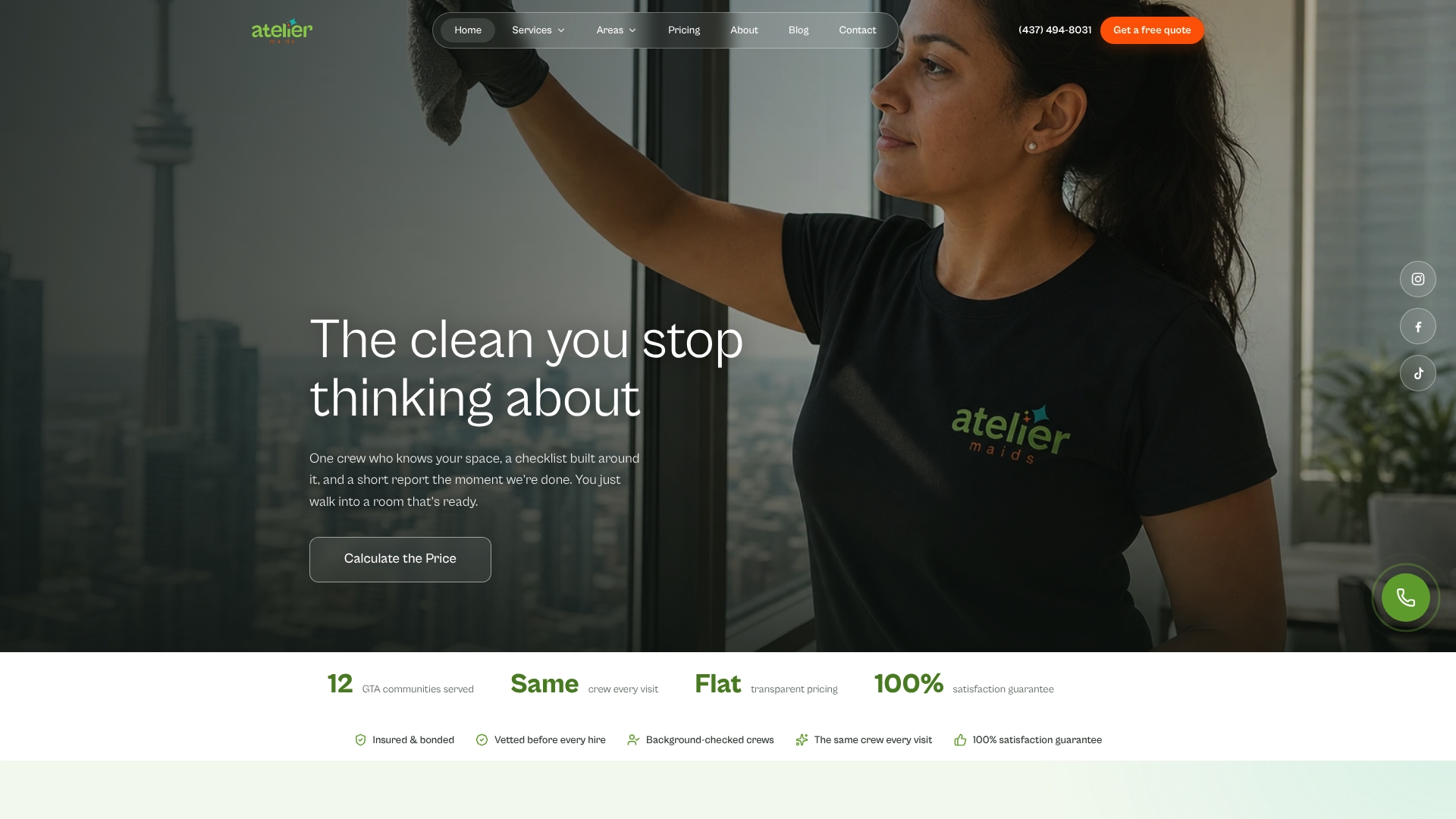
Here’s how the fit works in practice:
- Insured, background-checked teams, with a certificate of insurance available on request.
- A dedicated crew assigned to your home, not a rotating roster of strangers.
- Flat pricing agreed upfront, so invoices don’t move around between visits.
- A written service report left after every appointment.
- A satisfaction guarantee that covers re-cleans if something gets missed.
If you’re weighing a recurring house cleaning plan or need coverage for an office space, the next step is simple: request a quote and ask for the COI and written scope before your first visit is scheduled. That’s the same standard this whole article has been building toward, just applied to the company you’re about to hire.
Sources
- 7 tips for hiring a house cleaning service | BBB
- How to find a good house cleaner | Angi
- First-time guide to hiring a home cleaning service | Resident