
Post construction cleaning steps to get any space handoff ready
Post construction cleaning steps to get any space handoff ready
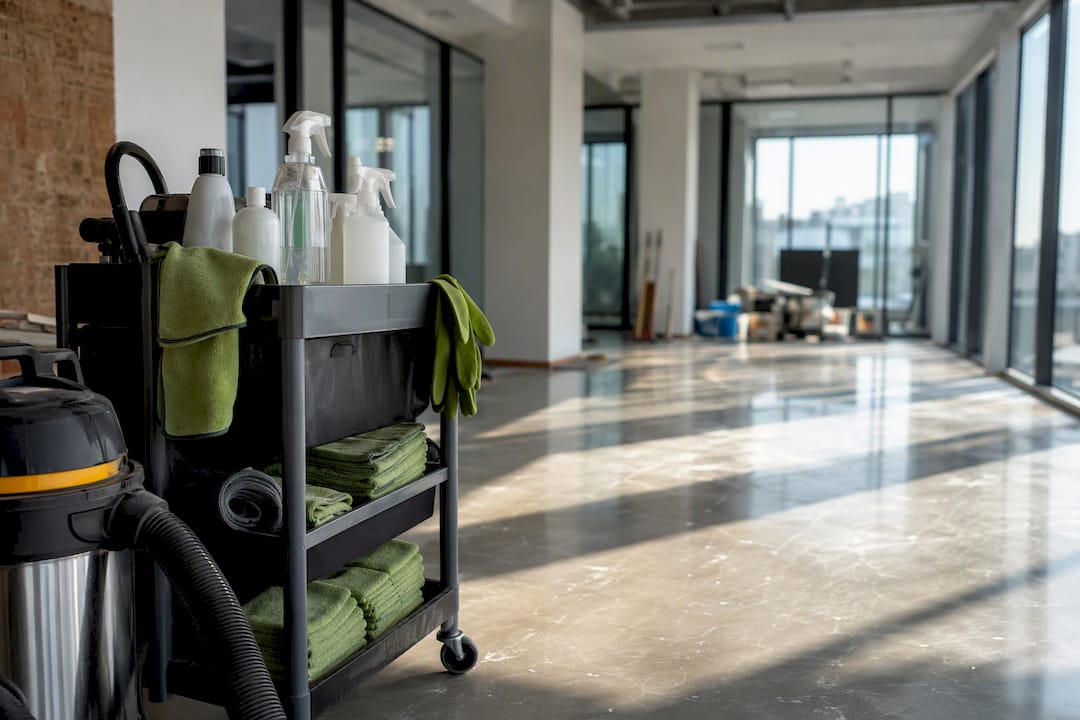
Run three phases in order: rough clean, light or main clean, then final or sparkle clean. Never skip one or blend them together. Start top-to-bottom in every room and finish floors last, because dust falls and you don’t want to reclean a surface twice.
The moment a crew has access, do this first:
- Clear large debris, packaging, and offcuts so people can move safely.
- Confirm utilities are live (power, water) before any wet cleaning starts.
- Isolate or bag HVAC returns and vents to stop dust circulating through the building.
- Stage the three-phase approach so nobody skips a step under deadline pressure.
Get an industrial shop vac, a push broom, and basic PPE (gloves, dust masks, eye protection) on site for day one. Save the HEPA vacuum and microfibre kit for the final phase, when fine dust control matters most.
Key Takeaways
The three-phase sequence, rough, light or main, then final, prevents rework because top-to-bottom cleaning and phase-specific tools stop dust from recontaminating finished surfaces.
| Point | Details |
|---|---|
| Follow the three-phase order | Run rough, then light/main, then final/sparkle; never blend or skip a phase. |
| Clean top to bottom | Start with ceilings and vents, finish with floors, to stop dust resettling. |
| Match tools to the phase | Use industrial vacuums for rough cleans and HEPA vacuums with microfibre for final. |
| Book cleaning as a milestone | Schedule the final clean 3 to 5 days before handover with a touch-up 24 to 48 hours prior. |
| Consider a dedicated crew | Ateliermaids assigns one crew per site with flat pricing and a service report after each visit. |
Table of Contents
- What are the three phases of post construction cleaning steps?
- How do you clean each room after construction?
- What tools and supplies does each phase need?
- When should you schedule each cleaning visit?
- What safety and disposal rules apply during cleanup?
- How does Ateliermaids handle post-construction cleanups?
- The real gap in most post-construction cleaning advice
- Book a professional final clean instead of guessing on timeline
- Sources
What are the three phases of post construction cleaning steps?
Rough clean happens the moment major construction work wraps and debris is still everywhere. It’s about bulk removal, not polish: sweeping out offcuts, bagging packaging, vacuuming visible dust with heavy-duty equipment. Light or main clean runs once trades have mostly cleared out but before final finishes go in, focusing on surfaces, fixtures, and cabinetry. Final or sparkle clean happens right before handover, when every trace of dust, film, and residue needs to disappear under close inspection.
- Rough clean — heavy-duty crews, industrial vacuums, focus on safety and debris.
- Light/main clean — general labour crews, surface wiping and fixture prep.
- Final/sparkle clean — detail-trained crews, HEPA vacuums and microfibre, focus on inspection-readiness.
Skipping or compressing a phase doesn’t save time. It just pushes rough-clean work into the final visit, which drives up hours and risks scratching or hazing finishes that were never meant to take that kind of abuse.
Pro Tip: Book each phase as its own line item with its own scope. A GC’s guide to rough versus final cleans notes that separating quotes keeps timelines honest and stops a compressed schedule from wrecking the final result.
How do you clean each room after construction?
Work top-to-bottom in every single room: ceiling and vents first, then walls and fixtures, then floors last. This isn’t a preference, it’s physics. Dust falls, and cleaning a floor before you’ve knocked debris off a ceiling fan means recleaning that floor an hour later.
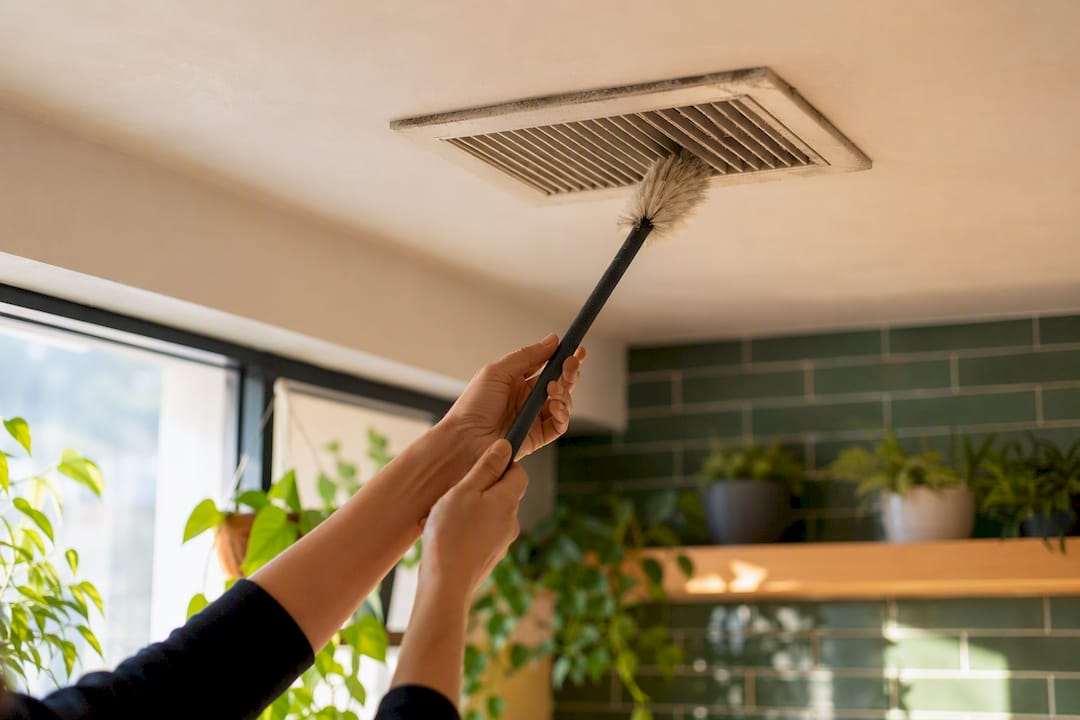
A documented cleaning sequence that works across most builds runs: remove large debris, dust and vacuum high to low, tackle windows and glass, scrub and sanitize surfaces, then mop and do final touch-ups.
Kitchens
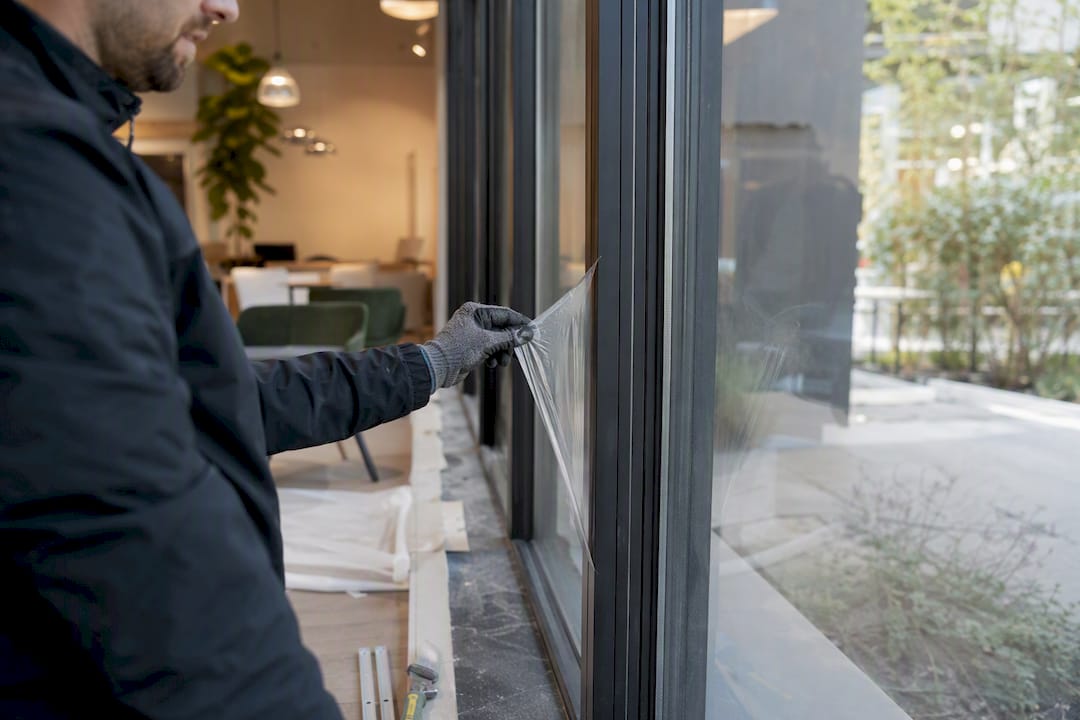
- Remove protective film from appliances and cabinet fronts.
- Clean cabinets inside and out, including hinges and tracks.
- Wipe down countertops, backsplashes, and appliance exteriors and interiors.
- Scrape off grout haze and construction adhesive from tile and stone.
Bathrooms
- Peel off protective film from tubs, toilets, and vanities.
- Descale faucets and showerheads.
- Remove grout haze and silicone smears along seams and tub edges.
- Polish chrome and stainless fixtures until they’re streak-free.
General areas
- Wipe trim, doors, and door frames from top to bottom.
- Clean radiators, baseboard heaters, and light fixtures.
- Vacuum and wipe vents and diffusers.
- Clean closets inside and out, including shelving and rods.
Windows and glass
- Scrape off labels and film with a plastic scraper, never metal on tinted glass.
- Clean frames, sills, and tracks before touching the glass itself.
- Squeegee glass for a streak-free finish, working from top corners down.
- If any window needs exterior access, follow proper fall-protection protocol. This isn’t a task to improvise on a ladder.
Window detailing deserves its own pass rather than a rushed five minutes at the end. Bring adhesive solvents and scrapers matched to your glazing type, since the wrong solvent can cloud certain coated glass permanently.
Floors last, always
- HEPA vacuum edges and corners first to catch settled dust before it gets kicked up.
- Mop or scrub based on floor type: damp mop for sealed hardwood, wet mop for tile, appropriate cleaner for stone.
- If carpet was installed, extraction cleaning removes construction dust that a vacuum alone won’t lift.
Pro Tip: Test any adhesive remover or stone cleaner on a hidden patch first. Some construction adhesive solvents haze natural stone or strip factory sealant on engineered flooring, and you won’t know until it’s too late.
What tools and supplies does each phase need?
Rough-clean gear and final-clean gear barely overlap, and packing the wrong kit for the wrong phase wastes a visit.
Rough-clean essentials
- Push brooms and heavy-duty shop vacuums.
- Heavy-gauge disposal bags and a debris cart.
- PPE: gloves, dust masks, safety glasses.
Final-clean essentials
- HEPA-filter vacuum for fine dust capture.
- Microfibre cloths in colour-coded sets (glass, surfaces, fixtures).
- Squeegees, detail brushes, and non-abrasive cleaners.
- Plastic scrapers for labels, paint spots, and adhesive.
Standard vacuums and dry sweeping just push fine dust back into the air. HEPA filtration paired with microfibre actually traps it, which matters most in the final phase when the room needs to pass a close inspection.
For consumables, keep glass-cleaning kits, floor-specific cleaners, and adhesive solvent on hand as they run out fast on a single project. If this is a one-off job rather than a recurring service line, renting a HEPA vacuum usually beats buying one outright. Staging heavy gear for the rough phase separately from detail kits for the final phase also keeps the site less cluttered between visits.
When should you schedule each cleaning visit?
Treat cleaning as a milestone in the build schedule, not an afterthought squeezed in after everyone else leaves.
- Book the rough clean as soon as major debris removal and framing dust settle.
- Schedule the main clean once trades have largely finished but before final finishes (flooring, paint touch-ups) go in.
- Book the final clean 3 to 5 days before handover, giving buffer time for a punch-list walkthrough.
- Plan a touch-up visit 24 to 48 hours before occupancy to catch any last dust or fingerprints.
Coordinate protective-cover removal with the general contractor so it doesn’t happen mid-clean. Crew size should scale with square footage. A two-person team on a 3,000-square-foot final clean will run long and risk missed spots.
Pro Tip: Walk the site with the site manager before booking the final clean. Confirming which protective films and covers are still in place saves your crew from cleaning around obstacles that should’ve come off already.
What safety and disposal rules apply during cleanup?
PPE isn’t optional on an active site: gloves, dust masks, and eye protection stay on through the rough phase at minimum. Segregate waste properly, sharp offcuts, drywall scrap, and packaging each have different disposal paths, and mixing them can violate local waste rules.
- Handle paint spots and adhesive residue with the correct solvent, never a generic all-purpose cleaner.
- Test any chemical on a small hidden area before using it broadly.
- Ventilate rooms when using solvents or strong degreasers.
- Stop and call a specialist immediately if you suspect asbestos, mould, or contaminated waste. That’s not a job for a standard cleaning crew.
How does Ateliermaids handle post-construction cleanups?
Ateliermaids builds every post-construction job around the same phase-based structure covered here, with a dedicated crew assigned to the site from rough clean through final walkthrough rather than rotating staff who don’t know the space.
- A pre-clean site walk to scope debris, protective coverings, and problem areas before work starts.
- Flat pricing set upfront, so a compressed timeline doesn’t turn into surprise costs.
- A detailed service report after every visit, documenting what was done and what to flag for the final walkthrough.
- Close attention to baseboards, vents, and window tracks, the spots most inspections catch first.
A consistent crew and a repeatable checklist mean fewer callbacks and less risk to freshly installed finishes.
The real gap in most post-construction cleaning advice
Most guides treat post-construction cleaning as one big task with a checklist attached. That’s backwards. The phase you’re in determines the tools, the crew skill level, and the pace, and treating rough and final cleans as interchangeable is where budgets and timelines fall apart.
The conventional advice undersells scheduling. Plenty of checklists list tasks in order but skip the part where cleaning has to be booked as its own milestone on the build calendar, with real lead time before handover. Miss that, and even a well-executed final clean gets rushed into a single afternoon that should’ve taken two days.
If there’s one thing to prioritize first, it’s separating the phases in your budget and your calendar before you separate them on the checklist. Get that structural decision right, and the room-by-room tasks mostly take care of themselves. Get it wrong, and no amount of microfibre cloths will save a compressed timeline.
— Atelier
Book a professional final clean instead of guessing on timeline
Running these phases yourself works, but it takes real coordination, the right equipment for each stage, and a crew that won’t cut corners when the schedule gets tight. Ateliermaids handles that coordination for you: one dedicated crew that learns your space, a flat price agreed before work starts, and a service report after every visit so you know exactly what got done.

That predictability matters most on a post-construction job, where a missed vent or a hazy window can mean a failed inspection. Whether you’re managing a single house cleaning turnover or a larger commercial buildout through janitorial programs, the same phase-based process applies. Check pricing and book your final clean with enough lead time to fit a proper punch-list walkthrough before handover.
Sources
For phase definitions and equipment lists, see Nilfisk’s post-construction cleaning overview, Trimaco’s checklist, and 360 Clean’s GC guide. For low-dust renovation methods, see One Day Doors & Closets.
- 3 Steps In Post-Construction Cleaning You Should Know
- Post-Constriction Cleaning Check List
- Rough Clean vs. Final Clean: A GC’s Complete Guide to a Clean Handoff
- Post Construction Cleaning Study Guide | Final Clean, Phases, Checklists & Best Practices